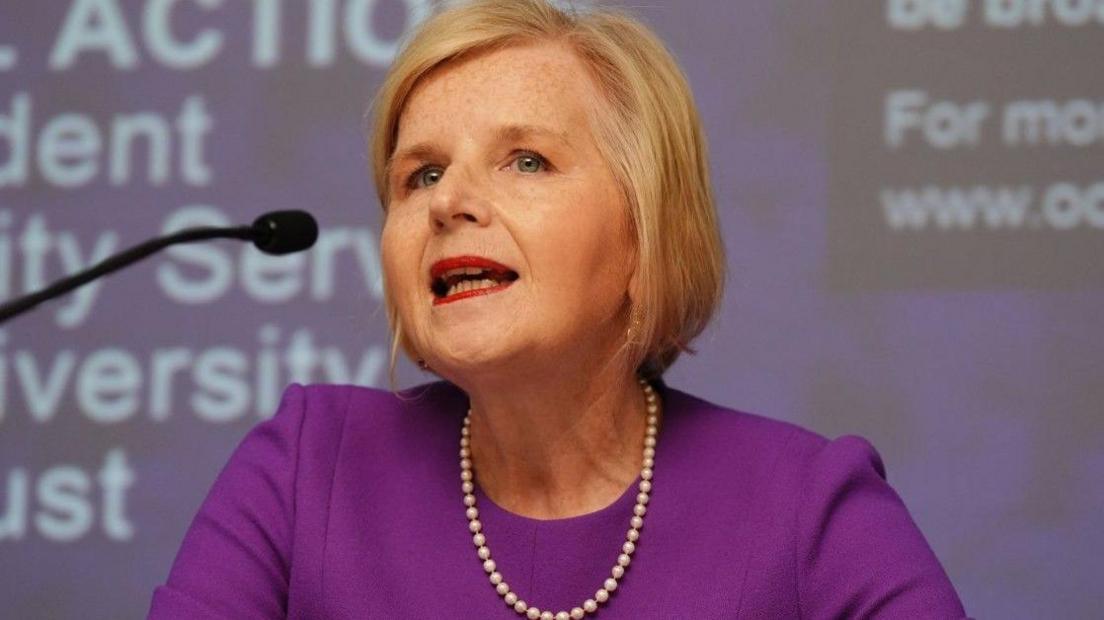

Hundreds of mothers and babies suffered potentially avoidable harm or died due to "deeply embedded systemic failures" at maternity units in Nottingham, a review led by senior midwife Donna Ockenden has concluded.
The inquiry - the largest of its kind in NHS history - found leaders at Nottingham University Hospitals (NUH) NHS Trust knew there were serious issues in its maternity department going back to "at least 2010", but failed to take action to prevent more harm and deaths.
Ockenden said she hoped her conclusions would "drive real and lasting change to maternity services in England".
Here are some of the main findings at a glance.
About 2,500 families and more than 800 members of staff contributed to the inquiry, which started in 2022.
Overall, experts concluded there were "potentially avoidable" outcomes for mothers and babies in 444 maternity cases leading up to May 2025, alongside 76 neonatal cases.
All these cases were graded as two or three for harm - with grade two representing "significant concerns" and grade three "major concerns" over care.
Different care may have altered the outcome for 260 babies, who died or were harmed, the review team told the BBC.
Of that number, 155 babies died while 105 suffered serious injury due to substandard care, with some left with permanent brain damage.
The review concluded the harm was rarely the result of a single issue or specific failing.
Experts found adverse outcomes were linked to multiple factors, including failures in the monitoring of babies, poor interpretation of heart monitoring, a failure to recognise babies were in distress during labour and a failure to escalate some cases to senior doctors.
Ockenden added many of the systems of oversight established for maternity care were "no longer fit for purpose".
And there was also a major criticism of the trust's workplace culture, which was described as "bullying and toxic" over several years.
Women in the middle of labour were told to "pull themselves together" - while another submission from a mother recalled being told to "wait their turn" as there were "other women they had to sort".

Many of the problems detailed in the report have been known about at the trust since "at least 2010", Ockenden said.
These include insufficient staffing, and the inability of staff to carry out basic and often mandatory training.
Actions set down in the review "when implemented will drive improvement both within perinatal services at Nottingham University Hospitals NHS Trust and across England", she said.
Concerns were often dismissed or minimised, the review found, reducing opportunities to identify deterioration and intervene.
With antenatal care, women repeatedly described feeling unheard, inadequately informed and unsupported when expressing anxiety, particularly in relation to reduced foetal movements or emerging medical complications.
There was inadequate communication support for women whose first language was not English. Staff described racism and "racist attitudes towards black women labelled too loud, too demanding".
With antenatal care, women repeatedly described feeling unheard, inadequately informed and unsupported when expressing anxiety, particularly in relation to reduced foetal movements or emerging medical complications.
The review team described a "bullying and toxic culture" at the trust over years, with some staff members "specifically and consistently mentioned as forming intimidating cliques that were/are well known, but not confronted".
There was also a belief in the "Nottingham way" and "tribalism" among staff groups.
Leadership instability was a "major contributing factor" affecting the quality and safety of maternity services, the review found.
Between 2017 and 2021 there was "sustained turnover in senior maternity leadership positions" and senior operational roles.
One member of staff said "bad behaviours and toxic culture were normalised; people didn't even recognise it. [There were] entrenched ways of behaving that were unprofessional and cruel to women on labour ward".
Staff also reported "a culture of organisational denial" over years, where poor outcomes "were regularly dismissed as 'known complications".
Ockenden added: "What the evidence shows is that at Nottingham, a toxic culture was allowed to take hold and was allowed to persist. A small number of powerful leaders described in both family and staff testimonies as having infected the unit, creating an environment in which bullying was normalised, speaking up was dangerous and governance was shaped by self protection, rather than patient safety."
The review team identified significant failures in post-death care, including concerns related to loss of dignity, poor mortuary processes, lack of effective identification systems and inappropriate communication.
These failings led to avoidable and often long-term trauma for bereaved families at their most vulnerable time.
Ockenden said one "very serious incident" involved the release of the wrong baby to a funeral director in 2022.
Another incident outlined from 2019 said "one very early gestation baby was inadvertently disposed as clinical waste by laboratory staff after her post-mortem examination, resulting in a complete loss of dignity for the baby and significant distress to her parents".
The review set out a number of actions NUH must take to "directly address the failings identified".
These include:
Urgent improvements to risk management and monitoring
Strengthening escalation protocols, communication and safe trasnfer of care
Improve neonatial care by strengthening traing to ensure signs of serious illness are identified
Standardising emergency care and reducing variation in practice, particularly in the management of postpartym haemorrhage
Improving post-death care and bereavement processes
If you have been affected by any of the issues raised in this story, support is available via the BBC Action Line
Tell us which stories we should cover in Nottingham
Listen to BBC Radio Nottingham on Sounds and follow BBC Nottingham on Facebook, on X, or on Instagram. Send your story ideas to eastmidsnews@bbc.co.uk or via WhatsApp on 0808 100 2210.