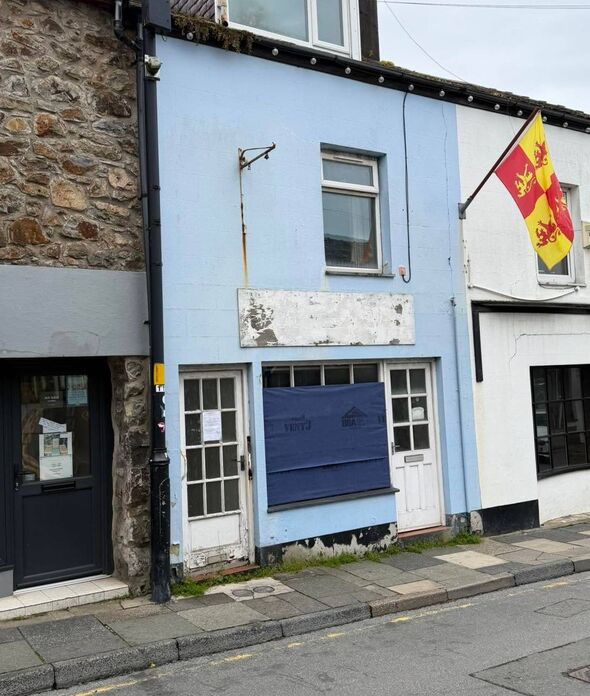

Not so long ago, it was a jewel in the crown of this beautiful corner of the UK — now residents and visitors say it resembles a "ghost town" and a frustrated shopkeeper has voiced fears for his "dying" town.
Each year millions of tourists pass through the gateway seaside town of Pwllheli on the beautiful Llŷn Peninsula of north-west Wales but fewer are stopping as the shutters go up. Long-time caravan owners have quit the area and those visitors who do venture into the town say they have been "shocked" by the desolation: "Even half the charity shops were shut when I visited," said a woman online.
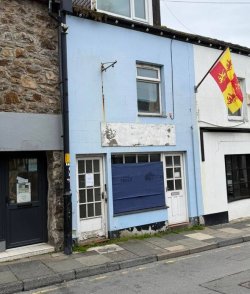
Businessman Gavin Nicholas this week posted a dozen photos of buildings from a single street that until recently were occupied by local traders. A few years ago, Gaol Street was thriving area with around 30 shops, North Wales Live reports — now just eight remain.
As Mr Nicholas fights ever-rising costs and business rates, his exasperation was echoed by celebrity potter Keith Brymer Jones., whose transformation of the town's derelict Grade II-listed chapel featured in the three-series Channel 4 documentary Our Welsh Chapel Dream.
Posting online, he said: "The business rates are killing the High Street. It's not rocket science. There are other places with reduced business rates to encourage and breathe life back into high streets. And what happens? It does! It's incredibly short-sighted not to support small independent businesses. It's what makes a place unique, interesting, and ultimately brings in visitors!"

On social media, a local entrepreneur explain how she now regrets opening a shop in a town with rapidly declining footfall. Faced with growing frustration and anger in the town, its mayor – who was also forced to close her own shop – has pledged to prioritise the issue at the next town council meeting.
Striking murals recently unveiled in the former market town have been welcomed but have failed to lift the despondency. Concerned that Pwllheli is "dying on its feet", residents have called for cheaper and more accessible parking. Others have bemoaned the arrival of edge-of-town retailers like Aldi or blamed Asda for out-muscling independents.
Some want a complete town centre rethink with incentives for local businesses and catalyst attractions such as a food hall. Many are critical of "anti-tourism" policies for deterring well-heeled visitors and draining money from the town.
Gavin Nicholas, 48, runs TE Hughes, a century-old Pwllheli business selling blinds, curtains and paint. Having worked there six years, he took on the shop a decade ago and well remembers the time when Gaol Street was "bumper-to-bumper" with different offerings.

He said the cost-of-living crisis allied to government policy is taking its toll on his business. It has been forced to shed staff from seven to two and closing time has been brought forward to 2pm as "we simply can't justify the extra hours".
In a social media post, he said: "When will this attack on small businesses and hard working people end? Something has to change immediately to rescue what is left. How can we keep getting punished and expect to continue?"
It prompted a huge reaction, with residents remembering the "beautiful" town they'd lost and visitors shaking their heads in disbelief at Pwllheli's rapid fall from grace.
In April this year, TE Hughes was moved into the highest banding for business rates, meaning it no longer receives any relief. The decision failed to account for down-sizing — more than half of the building now lies unused. Appeals to the UK Valuation Office Agency came to nothing and the owner fumed: "We're being charged like we're one of the big supermarkets."
At the same time, costs are soaring and customers are feeling the pinch. Minimum wage and National Insurance increases are another bane – Mr Nicholas estimates minimum pay costs now amount to around £20-an-hour. Unable to recruit, he's working himself to the bone just to stay afloat. Many others have given up trying.
"On our street the newsagent recently become a homeless shelter for young people," he said. "A coffee shop that had been here for years and years has closed – that used to bring a lot of people to the street.

"A popular shoe shop has closed – it's owner said it was no longer worth it. Instead she's focusing on her other shop in Aberdaron (a former fishing village on the tip of the peninsula with less than a quarter of the population). She said it was more viable than Pwllheli, which just goes to show. Two clothing stores have gone from the street, Lloyds Bank on the corner... the list goes on."
Critics of business rates argue they discourage productivity, suppress ambition and ultimately deprive communities. Even if even if footfall falls or turnover declines, bills can rise simply because property values have increased. As a result, many small independent traders pay tax based on the space they occupy, not the economic realities they face.
Transitional relief in Wales can ease the pain and a new retail multiplier has been welcomed. Yet bills keep rising: hardest hit in the 2026-27 Welsh Government budget were pubs, music venues and restaurants – so much so they were awarded an additional 15% relief to stem increasing costs this year.


Mr Nicholas said the system is crushing dreams and strangling opportunities. He wants to a complete rethink on business rates for small enterprises so that ambition is encouraged and economic activity nurtured. As things stand, entrepreneurship is being penalised and communities are paying the price, he said.
"People are getting angrier and more frustrated," he said. "There's little incentive to work hard any more as every single penny is being taken away from you.
"It's a perfect storm that's not just affecting Pwllheli but also places like Bangor and Caernarfon. We have to do something to get businesses back open again.
"People say it's not worth going into town as there's nothing for them any more. This collapse has been happening for years. We need to start lighting a fire inside ourselves and start fighting for what we believe in."
Mr Nicholas fears High Street pressures are having profound impacts on society. "The lack of money around is forcing people to buy cheaper or shop online and that's having a wider societal effect.
"I see it in the phone calls and texts we get – the tone has become angrier because people feel they are being squeezed from all sides and no one will listen to them.

"A lot of people who come into the shop just want someone to speak to because they're feeling more isolated. Some thank us just for being there and listening. Independent shops offer a point of human contact for many and this mental health aspect is what's being lost. "
A chunk of trade at TE Hughes has disappeared since Gwynedd council began targeting second homes and holiday lets, said Mr Nicholas. As their owners often had annual spruce-ups, demand for paint and other supplies has fallen since heavily taxed owners began fleeing the county.
A Cheshire caravan owner, who's holidayed near Pwllheli for 32 years, said other factors were also to blame. He claimed an exodus was underway as people get fed up with longer journey times and even Wales' 20mph speed limits.
"We gave up in March," he said. "My boat is also up for sale and will probably also leave the area. This is happening quite a bit now: regular visitors walking away, taking the cash they inject to the local economy with them.

"The £20,000 I spent a year in Pwllheli supporting caravan site jobs, the boat yard, the shops, the pubs, the takeaways, the ice cream shops, the petrol station, the marina etc has gone. I don't see a big queue of people to replace it either."
Online retailers, often with favourable tax regimes, are often blamed for hollowing out town centres. But despite its troubles, Pwllheli still has much to offer. As well as help for independent businesses, locals and visitors want more help accessing the town's shops and attractions, with cheaper parking and better signage two things highlighted, along with pedestrianisation and al fresco dining.
Online, an Altrincham caravan owner and another regular visitor said Pwllheli still has "SO much potential". She said: "I absolutely love the little town. It's a lovely place and it's so sad to see the number of empty, beautiful commercial premises.
"We visited Abersoch for the first time last week and I honestly don't get what the fuss is about - how is it become 'the place' to visit. I much prefer Pwllheli and have loved discovering and supporting its local businesses."
Doing nothing is not considered an option. The alternative, said one woman, was to stand back and "watch Pwllheli town centre die".
Last Tuesday, the council hosted a drop‐in event for Pwllheli's for high street businesses. Its aim was to showcase the help available, from funding, to recruitment, regulation and local opportunities.
In 2024, the local authority developed a placemaking plan which sets out its vision for the town. Key elements included public realm upgrades in the High Street and on the North Quay waterfront.

The latter, an important linkage between the town centre and Pwllheli Marina, was also seen to have "significant potential" for retail, leisure and hospitality development as a "waterfront destination".
High Street pedestrianisation, a long-running idea, also resurfaced, with ambitions for a six-month trial of partial pedestrianisation from Market Square to Stryd Moch. Details can be found here.
Owners of commercial properties in Pwllheli town centre (and Bangor) can now apply for a council improvement grant of between £2,500 and £10,000. This grant will contribute up to 70% of the cost of improvements to building exteriors and signage. The aim is to regenerate the town centre and make it "lively, appealing, and attractive to all".
A council spokesperson said: "Like many high streets across the UK, Pwllheli town centre has experienced challenges in recent years. Cyngor Gwynedd fully recognises these challenges and, alongside a number of stakeholders, is actively working to develop new initiatives.
"The placemaking plan notes several projects which focus on revitalising the high street by making it a more attractive, accessible, and a vibrant place for residents and visitors alike.
"Over the past three years, Cyngor Gwynedd has distributed over £3m in business grants to improve the resilience of local enterprises. Cyngor Gwynedd has also recently adopted a new Economic Strategy for Gwynedd to identify priorities for strengthening the economy and ensuring that a variety of jobs in different sectors are available to sustain our communities."
Cyngor Gwynedd added: "The council provides a range of business support activities and is currently seeking funding to help businesses become more resilient in the current economic climate."
The local authority explained that business rates are determined by two elements – the property's Rateable Value and a multiplier. The former is set by the HMRC Valuation Office and the latter by Welsh Government.
The council's role is to collect these rates on behalf of the government. If any business has any queries regarding their non-domestic rates bill, they can contact the council on trethiannomestig@gwynedd.llyw.cymru or by calling 01286 682709 / 01286 682772.
North Wales Live approached the Welsh Government for comment.